
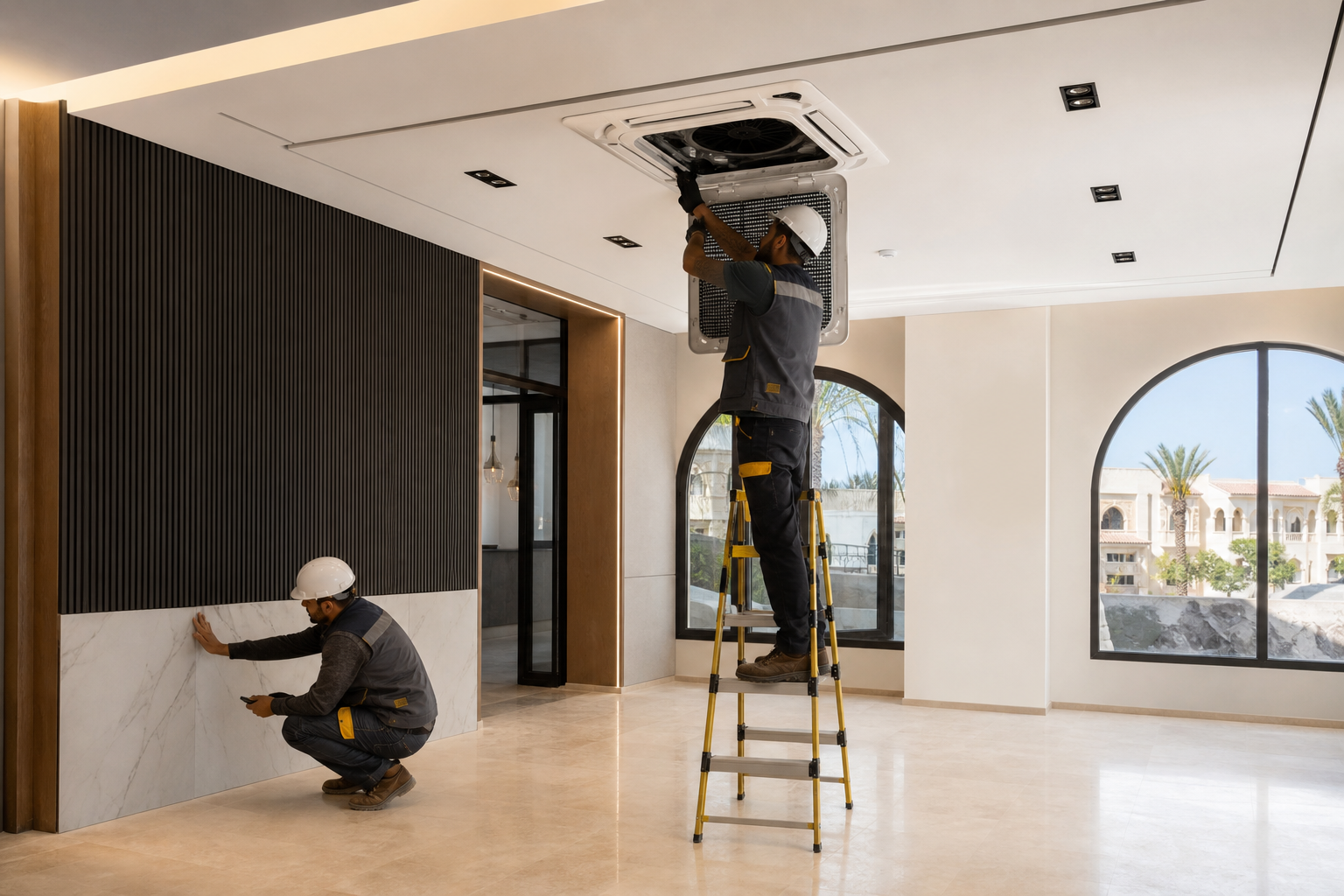
Morocco’s climate, building exposure and patterns of use create very different cooling needs. A reliable installation starts with data, not with a simple estimate based only on floor area.
1. Understand the real cooling load
Orientation, glazing, insulation, occupancy, lighting and equipment all affect heat gains. Two spaces with the same surface area may require very different capacities. A technical assessment should also consider fresh-air requirements and how operating hours change throughout the week.
Oversizing is not a safety margin. A unit that is too powerful can cycle frequently, reduce humidity control and consume more energy. Undersizing, on the other hand, leaves the system running continuously without reaching the target temperature.
2. Select a system that matches the building
Split systems can suit small independent rooms, while multi-split or VRF solutions provide more flexible control across several zones. Larger buildings may benefit from centralised systems, depending on maintenance resources and space for technical equipment.
Efficiency depends on the complete installation — equipment, controls, pipework, airflow and operation — not on one product label.
Look beyond purchase cost. Compare seasonal efficiency, availability of spare parts, noise levels, control options and the skills required for long-term maintenance.
3. Design airflow and controls carefully
Good air distribution prevents hot spots, draughts and unnecessary temperature differences. Indoor units, grilles and return-air paths must be positioned around the way people actually use the space. Pipe routes and drainage also need to be coordinated with ceilings, electrical work and access panels.
Zoning lets teams cool occupied areas without conditioning the entire building. Clear schedules, sensible set points and accessible controls can deliver significant savings without reducing comfort.
4. Protect performance with maintenance
Dirty filters, obstructed coils and low refrigerant levels reduce airflow and increase consumption. A preventive plan should cover cleaning, drainage checks, electrical connections, control settings and leak detection. Recording each intervention makes recurring faults easier to identify.
Before the hottest season, test the system under load rather than waiting for a failure. Planned maintenance costs less than emergency work and helps extend equipment life.
Planning a new HVAC installation?
Durtal assesses, installs and coordinates air-conditioning systems for professional spaces across Morocco.
Request a study ↗